 £4.99
Grief and Forgiveness: Forgiveness in Grief
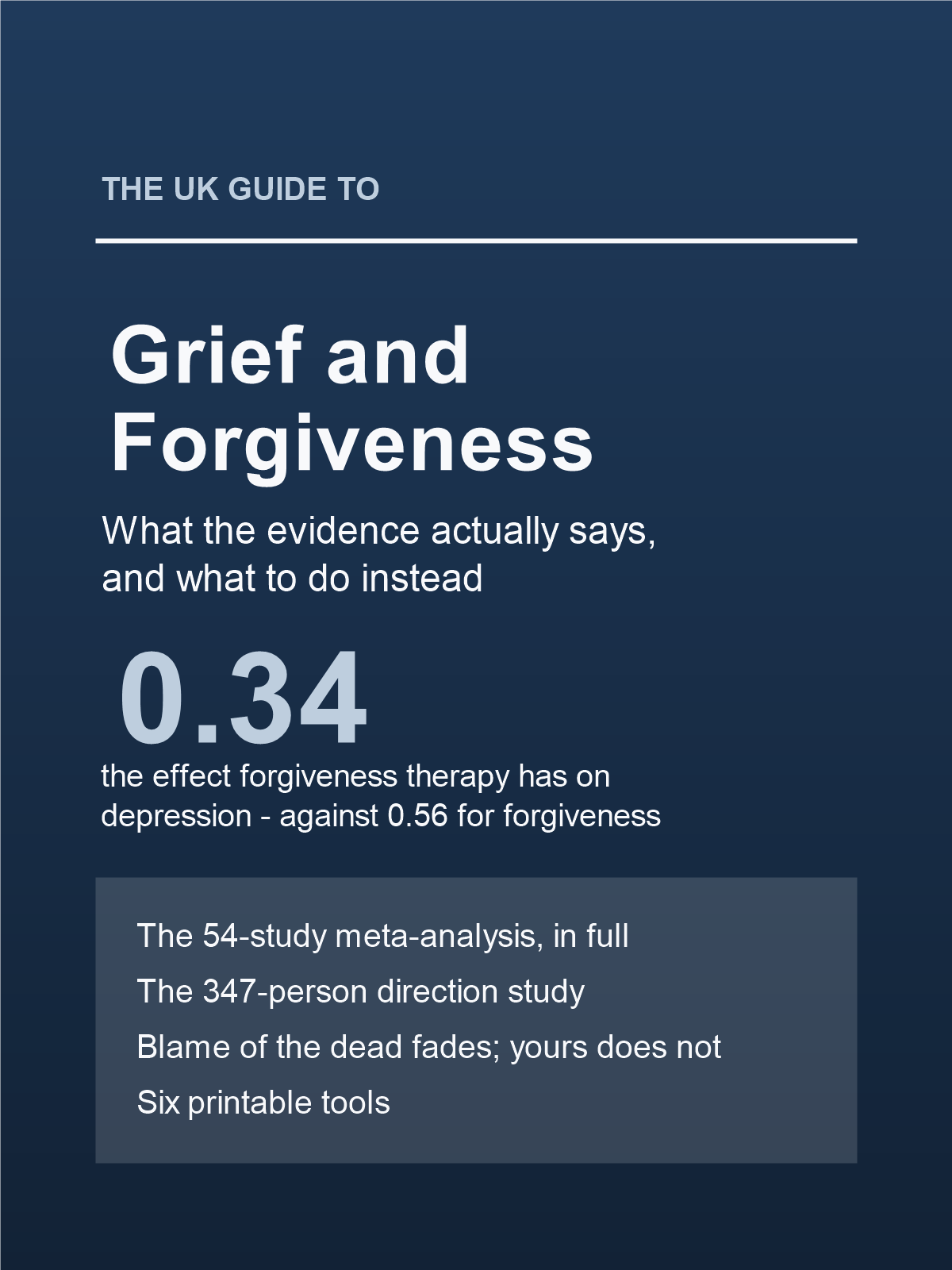
Nobody has shown that forgiving makes grief better. In the one longitudinal study designed to settle the direction of causation - 347 people, four waves over six weeks - the arrow pointed the other way: as people felt better, they became more forgiving, but forgiveness did not predict later improvement. The evidence that does exist is narrower than the marketing. A 2014 meta-analysis of 54 studies and 2,323 people found explicit forgiveness treatment produced more forgiveness than no treatment (effect 0.56) - and an effect on depression of only 0.34, roughly 40-50% smaller than the effect on forgiveness itself. Forgiveness therapy raises forgiveness more reliably than it lowers distress. And none of it is about bereavement: the founding trials explicitly excluded people who were grieving, so no forgiveness therapy trial has ever been run on bereaved people. What the grief research found instead is sharper and far more useful - blame of the dead stops predicting distress after fourteen months, while self-blame predicts it across the full sixty, and the real mechanism behind any benefit of forgiveness is less rumination, which you can act on this week without forgiving anyone.
- grief
- bereavement
- forgiveness
- +4