- strength training
- resistance training
- confidence
- self-esteem
- mental health
- exercise and mood
- beginner gym
- progressive overload
- habit building
- UK guidelines
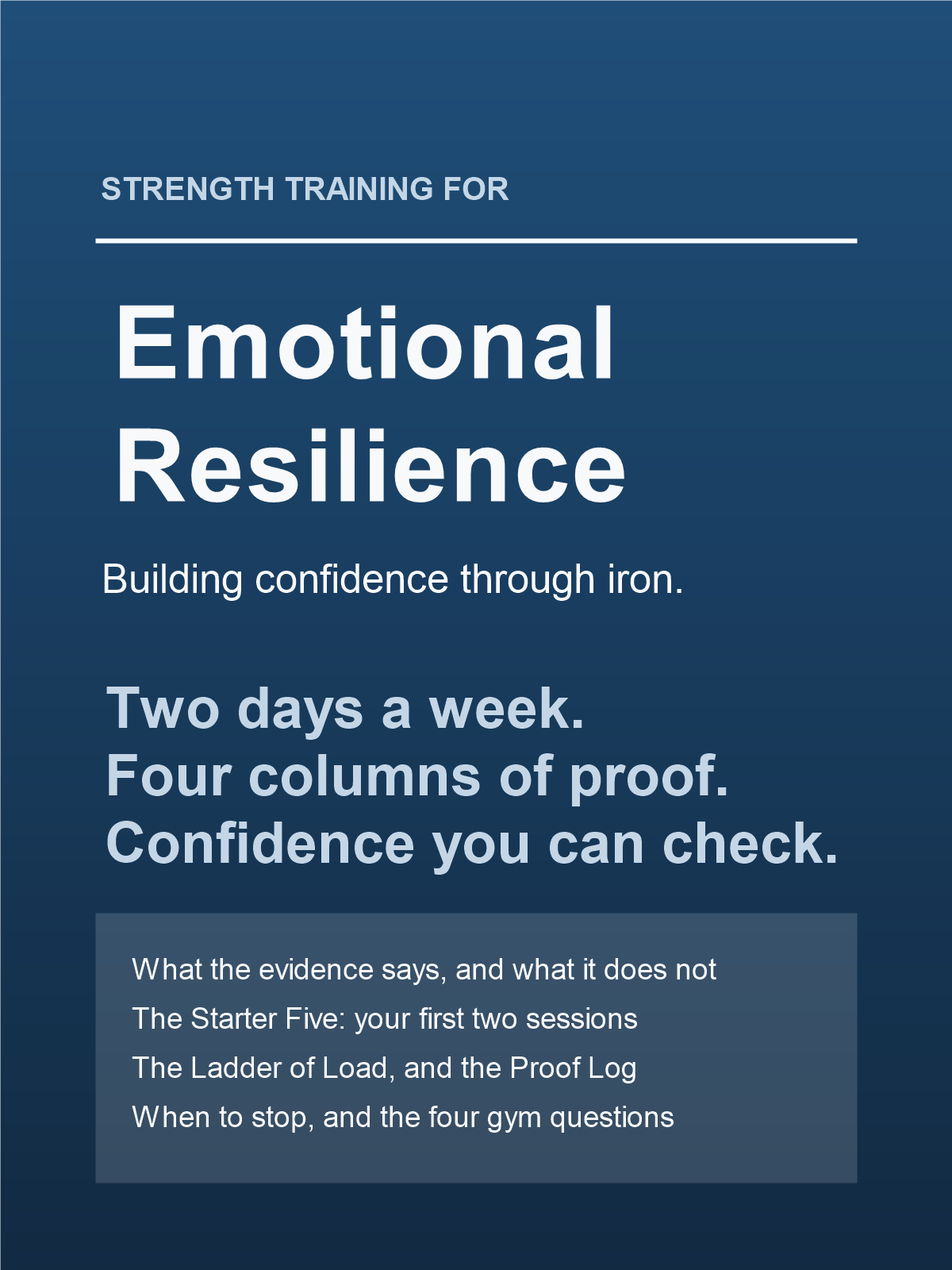
Strength Training for Emotional Resilience: Building Confidence Through Iron
Aerobic exercise still beats lifting for depression, and the exercise treatment NICE recommends is supervised moderate-intensity aerobic work in a group of eight, not a barbell. In the largest network meta-analysis ever run on exercise and depression - 218 studies, 14,170 people - walking or jogging came first at g -0.62, yoga second at -0.55, and strength training third at -0.49. Only one of those studies met the strictest quality criteria, and the reviewers rated their confidence in the strength training finding as very low. This guide opens with the three findings that make lifting look bad, then makes the case that actually holds. What it has behind it is real: strength training and yoga have the best drop-out record of any exercise compared, so if you have abandoned three fitness regimes already this is the one that lasts. Resistance training is the standout for self-esteem, where aerobic was not, and effects were proportional to how hard the work was. The Chief Medical Officers' guidelines, updated 10 July 2026, now say strength work should be considered as important as the famous 150 minutes of cardio, yet only 45 per cent of adults in England train twice a week. Ten chapters, ten named frameworks: the Five Ropes, the Starter Five, the Ladder of Load and the Proof Log. Every figure checked against the Chief Medical Officers, Noetel in the BMJ, Munro in the British Journal of Sports Medicine, NICE NG222 and Sport England on the day of publication. No membership, no supplement and no coach needed.
- Price
- £4.99
- Format
- Instant digital download
- Published
Opens the secure checkout in a new tab. Instant access after payment.
What's inside
- The honest version first: for depression, aerobic exercise still leads. Strength training earned a moderate effect (Hedges' g -0.49) in a 2024 BMJ network meta-analysis of 218 studies - and confidence in that evidence is rated very low.
- NICE's own recommended exercise treatment for depression is supervised moderate-intensity aerobic work in a group of about eight, for ten weeks or more. This guide does not claim to be that, and says so on page one.
- Only 45% of adults in England strength-train twice a week - 21.5 million people, per Sport England's Active Lives survey. More than half the country skips the one guideline with a two-day prescription.
- The Chief Medical Officers' physical activity guidelines, updated 10 July 2026, say strength work should be considered as important as the famous 150 minutes of cardio. They also say the evidence cannot specify a duration.
- What lifting is genuinely best at: self-esteem. A 2025 network meta-analysis found resistance training beat control on self-esteem where aerobic did not - in children and adolescents, which is the honest limit of that finding.
- Strength training and yoga have the best drop-out record of any exercise compared for depression. If you have quit three gyms already, that is the single most useful sentence in this book.
- A complete two-day-a-week programme: five movements, full body, two sessions. No coach, no membership and no equipment needed to start - bands, a chair or a water bottle will do.
- Progression rules that work wherever you train: double progression, reps in reserve, and how to know it is time to add weight or that you have added too much.
- The Proof Log: four columns that turn a bad day into a record. Confidence built in the gym is bookkeeping at least as much as it is biochemistry.
- For anyone over 50, and for anyone on GLP-1 weight-loss medication: fat and muscle both fall. The Chief Medical Officers say so explicitly, and strength work is the protection you actually control.
- The eight-hour sitting problem is a separate risk. Hitting 150 minutes of cardio does not cancel it - and there is no safe threshold for sitting, only less of it.
- When to stop and see a doctor, what to tell them, and the four questions to ask before you join any gym. Includes a crisis helpline block and a warning-signs section.
How you get it
- Pay securely through Payhip, the store that processes every order.
- The download link is emailed to you the moment payment clears.
- A PDF, readable on any phone, tablet or computer.